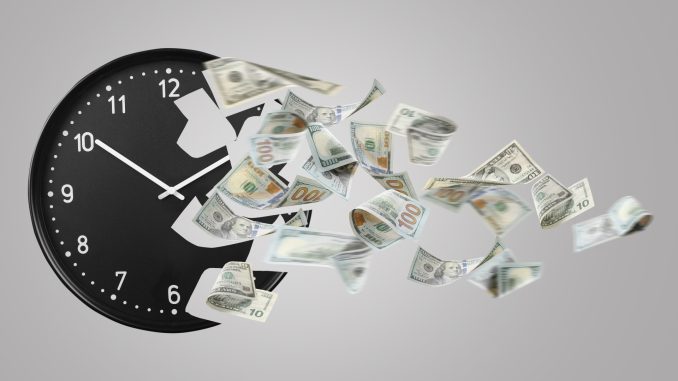
In business and in life, money is often treated as the ultimate measure of success. It is tangible, quantifiable, and universally recognized as a symbol of achievement. Yet when you look more closely, it becomes clear that time holds a value that money can never match. Time is finite, irreplaceable, and once spent, it cannot be earned back. While money can be accumulated, invested, and even recovered after losses, time moves in only one direction. This distinction makes time the most precious resource we have, even though it is often overlooked in favor of financial gain.
The difference between time and money becomes evident when you consider the nature of each. Money is a tool, a medium of exchange that allows us to acquire goods, services, and experiences. It can be saved, borrowed, or multiplied through investment. Time, however, is a constant. No matter how wealthy or resourceful you are, you cannot add hours to your day or extend your lifespan beyond its natural limits. This reality underscores why prioritizing time over money leads to more meaningful decisions, both personally and professionally.
In the business world, leaders often emphasize efficiency and productivity, which are essentially about maximizing the value of time. A company can generate revenue, but if its employees are overworked and burned out, the long-term sustainability of that revenue is compromised. Smart organizations recognize that time management is not just about squeezing more tasks into a day but about ensuring that time is used wisely. When time is respected, creativity flourishes, relationships strengthen, and strategic thinking becomes possible. Money may fuel operations, but time determines the quality of outcomes.
On a personal level, the value of time is most apparent in how it shapes experiences. You can buy material possessions, but you cannot purchase more moments with loved ones or more opportunities to pursue passions. Many professionals discover later in life that chasing financial success at the expense of time leads to regret. The missed family dinners, the vacations postponed indefinitely, and the hobbies abandoned for work all highlight the imbalance. Money can provide comfort, but it cannot replace the richness of time well spent.
Another way to understand the superiority of time is to consider opportunity cost. Every decision to spend time in one area means sacrificing it in another. Choosing to work late may increase income, but it reduces time available for rest or personal growth. Unlike money, which can be redistributed or reallocated, time spent is gone forever. This makes the allocation of time a far more critical decision than the allocation of money. Those who master the art of prioritizing time often find themselves not only wealthier but also happier and more fulfilled.
The emotional dimension of time further elevates its importance. Time carries with it memories, milestones, and meaning. A financial windfall may bring excitement, but it rarely creates lasting emotional impact in the same way that shared experiences do. The laughter of a child, the satisfaction of completing a project, or the peace of a quiet evening cannot be bought. These moments are the true currency of life, and they depend entirely on how we choose to spend our time.
From a strategic perspective, time is also the ultimate equalizer. Regardless of status, wealth, or influence, everyone has the same twenty-four hours in a day. How those hours are used determines outcomes far more than the amount of money available. Entrepreneurs often highlight that their greatest advantage is not capital but how they allocate their time—whether they focus on innovation, building relationships, or refining their vision. In this sense, time is the resource that shapes success, while money is simply the byproduct.
The scarcity of time also makes it inherently more valuable. Economists often argue that scarcity drives value, and nothing is scarcer than time. You can always earn more money, but you cannot earn more years. This scarcity forces us to confront the reality that time must be managed with care. Those who fail to recognize this often find themselves wealthy but dissatisfied, realizing too late that they traded irreplaceable time for financial gain that cannot restore what was lost.
Technology has amplified the tension between time and money. On one hand, digital tools allow us to save time by automating tasks and streamlining processes. On the other hand, constant connectivity often erodes boundaries, consuming time with endless notifications and demands. The challenge is not simply to earn more money through technology but to reclaim time. Those who succeed in using technology to free themselves for higher-value activities demonstrate the true advantage of prioritizing time over financial accumulation.
The relationship between time and money also plays out in investment decisions. Wise investors understand that the real goal is not just to grow wealth but to create freedom. Financial independence is valuable because it buys back time—time to pursue passions, to spend with family, or to explore new ventures. In this way, money serves time, not the other way around. The most successful individuals are those who recognize that wealth is meaningful only when it enhances the quality of the time they have.
Even in leadership, the allocation of time is more telling than the allocation of money. A leader who invests time in mentoring employees, listening to concerns, and fostering culture often creates more lasting impact than one who simply allocates financial resources. Time signals commitment and authenticity in ways that money cannot. People remember the moments when leaders were present, engaged, and supportive, and those memories shape loyalty and trust far more than financial incentives.
Ultimately, the true measure of wealth is not the size of a bank account but the freedom to spend time in ways that matter. Money can create opportunities, but time defines whether those opportunities are meaningful. The balance between the two is critical, but when forced to choose, time always outweighs money. It is the resource that shapes our lives, our relationships, and our legacies. Recognizing its value allows us to make decisions that prioritize what truly matters.
In the end, the lesson is simple yet profound: money is a tool, but time is life itself. To treat money as more valuable than time is to misunderstand the nature of both. By respecting time, we not only enhance our financial outcomes but also enrich our experiences, relationships, and sense of purpose. Time is the one resource we cannot afford to waste, and understanding its value is the key to living a life of true success.