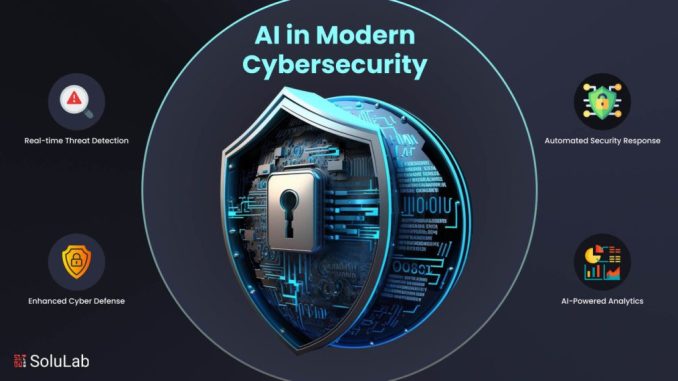
Artificial intelligence has become a critical component in the fight against cyber threats, offering a level of speed, scale, and sophistication that traditional security tools struggle to match. As organizations face increasingly complex and persistent attacks, AI is stepping in to help detect, analyze, and respond to threats in real time. Its role in cyber threat detection is not just about automation—it’s about enabling smarter, more adaptive defenses that can keep pace with the evolving tactics of malicious actors. For businesses navigating a digital-first landscape, understanding how AI contributes to cybersecurity is essential to building resilience and trust.
At the heart of AI’s effectiveness in cyber threat detection is its ability to process vast amounts of data quickly and intelligently. Modern networks generate enormous volumes of activity logs, user behavior records, and system alerts. Sifting through this data manually is not only impractical—it’s impossible at scale. AI algorithms, particularly those based on machine learning, can analyze these datasets to identify patterns and anomalies that may indicate a security breach. For example, if a user suddenly accesses sensitive files at odd hours or downloads unusually large volumes of data, AI can flag this behavior as suspicious, even if it doesn’t match known attack signatures. This proactive approach allows security teams to investigate potential threats before they escalate.
Traditional cybersecurity systems often rely on predefined rules and signatures to detect threats. While effective against known vulnerabilities, they fall short when faced with novel or sophisticated attacks. AI, by contrast, excels at identifying unknown threats through behavioral analysis and anomaly detection. It learns what “normal” looks like within a specific environment and can spot deviations that suggest malicious activity. This capability is particularly valuable in detecting zero-day exploits, insider threats, and advanced persistent threats that evade conventional defenses. By continuously learning and adapting, AI systems become more accurate over time, reducing false positives and improving response efficiency.
AI also enhances threat detection through natural language processing and contextual analysis. Cyber attackers frequently use social engineering tactics, such as phishing emails, to gain access to systems. These messages often mimic legitimate communications, making them difficult to detect. AI-powered tools can analyze the language, tone, and structure of emails to identify subtle indicators of fraud. For instance, an email that appears to come from a CEO requesting a wire transfer might be flagged if the phrasing or timing deviates from established patterns. This kind of contextual awareness adds a layer of intelligence that static filters cannot provide.
In addition to detection, AI plays a vital role in incident response. Once a threat is identified, time is of the essence. AI can automate initial containment steps, such as isolating affected devices, blocking malicious IP addresses, or revoking compromised credentials. These actions help limit damage while human analysts assess the situation. Furthermore, AI can assist in forensic analysis by reconstructing attack timelines, identifying entry points, and suggesting remediation strategies. This accelerates recovery and helps organizations learn from incidents to strengthen future defenses.
The integration of AI into cybersecurity also supports predictive capabilities. By analyzing historical data and threat intelligence feeds, AI can forecast potential vulnerabilities and attack vectors. This allows organizations to prioritize patching, adjust configurations, and prepare for emerging threats. For example, if AI detects a surge in ransomware activity targeting a specific industry, it can alert relevant businesses to take preventive measures. This shift from reactive to proactive security is a game-changer, enabling companies to stay ahead of attackers rather than constantly playing catch-up.
Despite its advantages, AI in cyber threat detection is not without challenges. One concern is the quality and diversity of training data. If AI models are trained on biased or incomplete datasets, they may overlook certain threats or generate inaccurate alerts. Ensuring that AI systems are exposed to a wide range of scenarios and continuously updated is crucial to maintaining effectiveness. Another issue is explainability. Security teams need to understand why an AI system flagged a particular event, especially when making high-stakes decisions. Developing transparent and interpretable models is an ongoing area of research and development.
There’s also the risk of adversarial attacks, where malicious actors attempt to deceive or manipulate AI systems. By feeding misleading data or exploiting model weaknesses, attackers can cause AI to misclassify threats or ignore suspicious behavior. This underscores the need for robust validation, monitoring, and human oversight. AI should be viewed as a powerful ally, not a standalone solution. The most effective cybersecurity strategies combine AI-driven automation with expert judgment, creating a layered defense that leverages the strengths of both.
From a business perspective, adopting AI for cyber threat detection offers strategic benefits beyond security. It demonstrates a commitment to innovation, compliance, and customer protection. In industries where data privacy and operational continuity are paramount—such as finance, healthcare, and critical infrastructure—AI-driven security can be a differentiator. It enables faster response times, reduces downtime, and supports regulatory requirements. Moreover, as cyber threats become more targeted and costly, investing in intelligent defenses is not just prudent—it’s essential.
In the broader context of digital transformation, AI’s role in cybersecurity reflects a shift toward intelligent, adaptive systems that learn and evolve. It’s part of a larger movement where technology doesn’t just support business—it actively safeguards it. As organizations continue to digitize operations and expand their digital footprint, the importance of AI in cyber threat detection will only grow. By embracing this technology thoughtfully and strategically, businesses can build a more secure future, one where threats are met with speed, insight, and resilience.