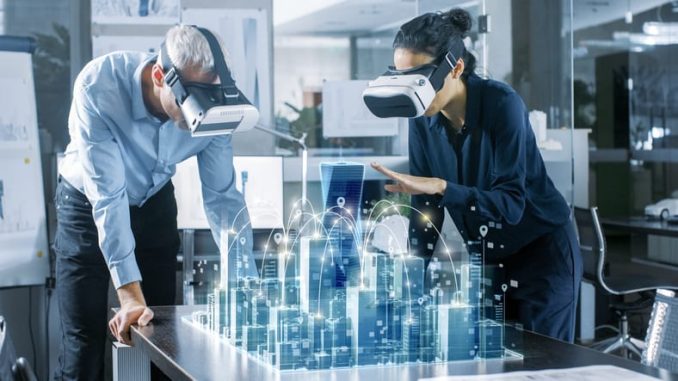
In recent years, Virtual Reality (VR) has emerged as a transformative technology with the potential to revolutionize various industries. One area where VR is making a significant impact is business training. By creating immersive, interactive, and realistic learning environments, VR is redefining how employees acquire skills and knowledge. In this article, we’ll explore the role of VR in business training, its benefits, and how companies can leverage this technology to enhance employee development.
1. Immersive Learning Experiences
Traditional training methods, such as classroom lectures or e-learning modules, often struggle to engage employees fully. VR, on the other hand, offers an immersive learning experience that captures the attention of trainees and keeps them engaged. By simulating real-world scenarios, VR allows employees to practice skills in a safe and controlled environment.
For example, a sales team can use VR to simulate customer interactions, enabling them to practice negotiation and communication skills without the pressure of real-life consequences. Similarly, medical professionals can use VR to perform virtual surgeries, improving their precision and confidence.
2. Enhanced Retention and Skill Acquisition
Studies have shown that immersive learning experiences lead to better knowledge retention compared to traditional methods. VR engages multiple senses, making the learning process more memorable and impactful. When employees actively participate in VR training, they are more likely to retain information and apply it effectively in their roles.
For instance, a manufacturing company can use VR to train employees on operating heavy machinery. By practicing in a virtual environment, employees can master complex procedures before working with actual equipment, reducing the risk of accidents and errors.
3. Cost-Effective Training Solutions
While the initial investment in VR technology may seem high, it can lead to significant cost savings in the long run. Traditional training methods often require physical resources, such as training facilities, equipment, and instructors. VR eliminates many of these costs by providing a virtual environment where employees can train anytime, anywhere.
Additionally, VR reduces the need for travel and accommodation expenses associated with off-site training programs. Companies can also reuse VR training modules for multiple employees, making it a scalable and cost-effective solution.
4. Safe Environment for High-Risk Training
Certain industries, such as construction, aviation, and healthcare, involve high-risk tasks that require specialized training. VR provides a safe environment for employees to practice these tasks without exposing themselves to danger.
For example, firefighters can use VR to simulate emergency situations, such as building fires or natural disasters. This allows them to develop critical decision-making skills and practice teamwork in a controlled setting. Similarly, pilots can use VR flight simulators to practice emergency procedures without risking lives or expensive equipment.
5. Personalized Learning Paths
One of the key advantages of VR training is its ability to offer personalized learning experiences. VR platforms can track employee performance and adapt the training content based on individual needs. This ensures that each employee receives the right level of challenge and support, maximizing their learning outcomes.
For instance, a customer service team can use VR to practice handling difficult customer interactions. The VR system can analyze each employee’s performance and provide tailored feedback, helping them improve their skills over time.
6. Real-Time Feedback and Analytics
VR training platforms provide real-time feedback and analytics, enabling employees and trainers to monitor progress and identify areas for improvement. This data-driven approach ensures that training programs are effective and aligned with business goals.
For example, a retail company can use VR to train employees on product knowledge and customer engagement. The VR system can track metrics such as response time, accuracy, and customer satisfaction, providing actionable insights for improvement.
7. Bridging the Skills Gap
As industries evolve, the demand for new skills continues to grow. VR training can help bridge the skills gap by providing employees with up-to-date knowledge and hands-on experience. This is particularly valuable in industries such as technology, where new tools and techniques are constantly emerging.
For instance, IT professionals can use VR to practice coding, network configuration, or cybersecurity protocols. By staying ahead of industry trends, employees can remain competitive and contribute to the company’s success.
8. Boosting Employee Engagement and Motivation
Traditional training programs can often feel monotonous and uninspiring. VR, with its interactive and gamified elements, makes learning fun and engaging. Employees are more likely to participate actively and complete training programs when they enjoy the process.
For example, a company can use VR to create gamified training modules where employees earn points or rewards for completing tasks. This not only boosts motivation but also fosters a sense of achievement and progress.
9. Applications Across Industries
The versatility of VR makes it suitable for a wide range of industries. Here are some examples of how VR is being used in business training:
- Healthcare: Medical professionals use VR to practice surgeries, diagnose conditions, and improve patient care.
- Retail: Employees use VR to learn about products, practice customer service, and manage inventory.
- Manufacturing: Workers use VR to operate machinery, follow safety protocols, and optimize production processes.
- Hospitality: Staff use VR to simulate hotel operations, handle guest complaints, and improve service quality.
10. Challenges and Considerations
While VR offers numerous benefits, there are some challenges to consider:
- Initial Costs: The upfront investment in VR hardware and software can be high.
- Technical Limitations: VR technology is still evolving, and some systems may have limitations in terms of graphics, latency, or user comfort.
- Adoption Barriers: Employees may need time to adapt to VR training, and some may experience motion sickness or discomfort.
To overcome these challenges, companies should start with pilot programs, gather feedback, and gradually scale their VR training initiatives.
Conclusion
Virtual Reality is transforming the way businesses approach employee training. By offering immersive, engaging, and effective learning experiences, VR is helping companies enhance skills, improve performance, and stay competitive in a rapidly changing world. As VR technology continues to advance, its role in business training will only grow, making it an essential tool for organizations looking to invest in their workforce.