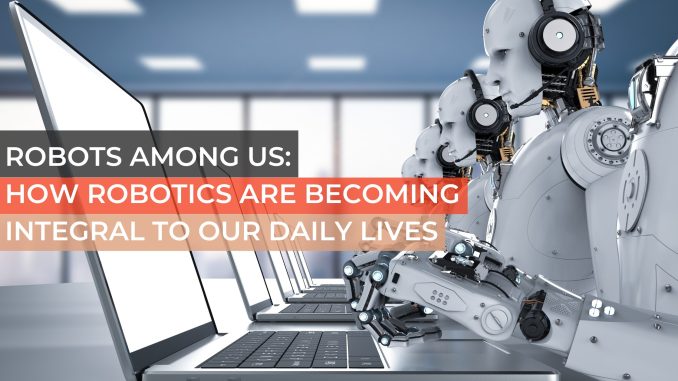
Robots are no longer confined to science fiction or high-tech laboratories—they’re quietly becoming part of our everyday routines, often in ways we don’t immediately recognize. From the moment we wake up to the time we go to bed, robotic systems are increasingly embedded in the services we use, the environments we inhabit, and the decisions we make. This integration is not about humanoid machines walking among us, but rather about intelligent automation that enhances convenience, efficiency, and safety across a wide range of domains. The evolution of robotics is reshaping industries and redefining what it means to live and work in a digitally connected world.
One of the most visible examples of robots in daily life is in household automation. Robotic vacuum cleaners, for instance, have become commonplace in homes around the world. These devices navigate living spaces autonomously, adjusting to floor types and avoiding obstacles with surprising precision. What once required manual labor is now handled by a compact machine that learns and adapts over time. Similarly, robotic lawn mowers and window cleaners are taking over chores that were traditionally time-consuming, freeing up hours for homeowners and offering a glimpse into how domestic life is being quietly transformed by robotics.
Retail and hospitality sectors are also embracing robotic solutions to enhance customer experience and streamline operations. In some hotels, robots greet guests, deliver room service, and even provide concierge support. These machines are designed not only to perform tasks but to interact with people in a friendly and intuitive manner. In supermarkets and warehouses, robots are used to restock shelves, manage inventory, and assist with logistics. Their ability to work around the clock without fatigue makes them ideal for repetitive tasks, while their integration with data systems allows for real-time updates and smarter decision-making. This shift is not about replacing human workers entirely but about augmenting their capabilities and improving service delivery.
Healthcare is another area where robots are making a profound impact. Surgical robots, guided by skilled physicians, enable minimally invasive procedures with greater precision and control. Rehabilitation robots assist patients in regaining mobility, offering personalized support based on individual progress. In elder care, robotic companions provide reminders for medication, monitor vital signs, and offer social interaction to reduce loneliness. These applications demonstrate how robotics can enhance quality of life, especially for vulnerable populations. The goal is not to depersonalize care but to extend its reach and effectiveness through intelligent support systems.
Transportation is undergoing a robotic revolution as well. Autonomous vehicles, while still in development and testing phases in many regions, represent a major leap forward in mobility. These vehicles rely on a combination of sensors, machine learning, and real-time data to navigate roads, avoid obstacles, and make decisions. While full autonomy is not yet widespread, features like adaptive cruise control, lane-keeping assistance, and automated parking are already part of many modern cars. Delivery drones and robotic couriers are also being piloted to handle last-mile logistics, particularly in urban areas. These innovations promise to reduce traffic congestion, lower emissions, and improve access to goods and services.
In the workplace, robots are becoming collaborative partners rather than distant tools. Known as cobots, or collaborative robots, these machines work alongside humans in manufacturing, assembly, and even creative tasks. They are designed to be safe, responsive, and easy to program, allowing workers to delegate repetitive or physically demanding tasks. This collaboration enhances productivity and reduces the risk of injury, while also enabling workers to focus on higher-value activities. The presence of robots in the workplace is shifting the nature of jobs, emphasizing adaptability, problem-solving, and digital literacy as key skills for the future.
Education is also being influenced by robotics, both in how students learn and what they learn. Robotic kits and programmable devices are used to teach coding, engineering, and critical thinking from an early age. These tools make abstract concepts tangible and foster hands-on learning. In some classrooms, robots are used to support students with special needs, offering personalized interaction and engagement. The integration of robotics into education is not just about preparing students for technical careers—it’s about cultivating curiosity, creativity, and collaboration in a world where technology is ubiquitous.
Even in entertainment and leisure, robots are finding their place. Robotic pets offer companionship without the demands of traditional animals, responding to touch and voice with lifelike behavior. In theme parks and museums, robots serve as guides and performers, blending technology with storytelling to create immersive experiences. These applications highlight the emotional and cultural dimensions of robotics, showing that machines can be designed not only to serve but to delight and inspire.
As robots become more embedded in daily life, questions about ethics, privacy, and social impact naturally arise. How do we ensure that robotic systems respect human dignity, protect personal data, and operate transparently? What happens to jobs and communities as automation becomes more prevalent? These are not just technical questions—they are societal ones that require thoughtful dialogue and inclusive policymaking. The challenge is to harness the benefits of robotics while addressing the risks and ensuring that the transition is equitable and responsible.
Ultimately, the rise of robots in everyday life reflects a broader shift toward intelligent systems that support human activity in diverse and meaningful ways. They are not taking over—they are teaming up. Whether cleaning floors, assisting in surgery, or guiding students through a lesson, robots are becoming trusted companions in our routines. Their presence is subtle but significant, and as the technology continues to evolve, so too will our relationship with it. The future of robotics is not just about machines—it’s about how we live, learn, and grow alongside them.