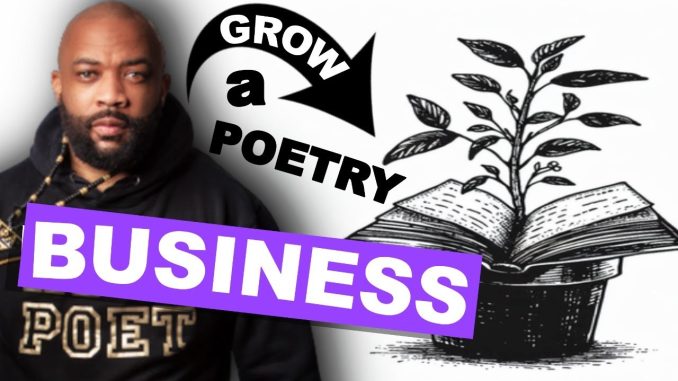
In the fast-paced world of business, where metrics, margins, and market share often dominate the conversation, it might seem counterintuitive to look to poets for guidance. Yet poets possess a unique set of skills that are surprisingly relevant to the challenges and opportunities faced by modern enterprises. Their mastery of language, sensitivity to nuance, and ability to distill complex emotions into concise expressions offer valuable lessons for leaders, marketers, and strategists alike. At a time when authenticity and emotional resonance are increasingly prized, the poetic mindset can help businesses connect more deeply with their audiences and operate with greater clarity and purpose.
One of the most striking qualities of poets is their attentiveness. They observe the world with a heightened awareness, noticing the subtle shifts in tone, the quiet tensions beneath the surface, and the patterns that others overlook. In business, this kind of perceptiveness is essential. Whether it’s reading the mood of a team, sensing shifts in consumer behavior, or anticipating market trends, the ability to tune into the less obvious signals can make the difference between reactive and proactive leadership. Poets teach us that insight often begins with stillness and observation, not with spreadsheets or dashboards.
Language is another domain where poets excel, and where businesses often falter. Corporate communication can be dry, jargon-laden, and impersonal. Poets, on the other hand, understand the power of words to evoke emotion, spark imagination, and build connection. When businesses adopt a more poetic approach to language—not in the sense of flowery prose, but in the sense of intentional, evocative expression—they can transform how they engage with stakeholders. A mission statement that reads like a poem, clear and stirring, will resonate far more than one that sounds like a legal document. Marketing campaigns that speak to the heart, not just the wallet, tend to leave a lasting impression.
Poets also embrace ambiguity and complexity, which is something business leaders often shy away from. In the pursuit of clarity and control, organizations can become rigid, uncomfortable with uncertainty. But the world is not always clear-cut, and neither are the problems businesses face. Poets are comfortable sitting with paradox, exploring multiple truths, and asking questions that don’t have easy answers. This mindset can be invaluable in strategic planning, innovation, and leadership. It encourages curiosity over certainty, dialogue over dogma, and exploration over execution. In a rapidly changing environment, the ability to navigate ambiguity with grace is a competitive advantage.
Another lesson from poets is the importance of emotional truth. Poets write from a place of vulnerability and honesty, often revealing the raw edges of human experience. In business, there’s a tendency to mask emotion behind professionalism, to treat feelings as distractions rather than data. But emotions drive behavior—of customers, employees, and leaders. A company that acknowledges and integrates emotional truth into its culture and communication is better equipped to build trust, foster loyalty, and inspire action. This doesn’t mean turning boardrooms into therapy sessions, but it does mean recognizing that people are not just rational actors. They are moved by stories, by meaning, and by connection.
Creativity, of course, is a hallmark of poetry, and a vital ingredient in business success. Poets are constantly experimenting with form, structure, and metaphor to express ideas in new ways. They challenge conventions and reimagine possibilities. Businesses that cultivate a poetic sensibility are more likely to innovate, to see beyond the obvious, and to create products, services, and experiences that surprise and delight. Creativity in business isn’t just about aesthetics—it’s about problem-solving, differentiation, and adaptability. Poets remind us that imagination is not a luxury; it’s a necessity.
Even the discipline of poetry offers insights for business. Writing a poem requires focus, revision, and a willingness to wrestle with complexity. It’s not about rushing to publish; it’s about refining until the essence is clear. In business, this translates to thoughtful strategy, intentional design, and a commitment to excellence. The poetic process encourages patience and precision, qualities that are often sacrificed in the race to scale or ship. By embracing the rigor of poetry, businesses can elevate their standards and deepen their impact.
Perhaps most importantly, poets understand the value of meaning. They write not just to inform, but to illuminate. In business, meaning is often treated as a byproduct rather than a priority. Yet companies that operate with a clear sense of purpose tend to outperform those that don’t. Purpose aligns teams, attracts customers, and sustains resilience. Poets remind us that meaning is not something to be added after the fact—it’s something to be woven into every decision, every message, every interaction.
In a world that often prioritizes speed over substance, efficiency over empathy, and profit over purpose, the wisdom of poets offers a powerful counterbalance. They invite us to slow down, to listen more deeply, to speak more clearly, and to lead with heart. Business doesn’t need to become poetry, but it can certainly learn from it. By integrating the poetic mindset into its practices, business can become not only more effective, but more human. And in the end, that may be the most valuable lesson of all.