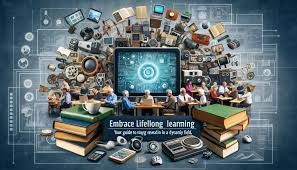
In a world where technology evolves faster than ever, the concept of lifelong learning has shifted from a personal aspiration to a professional necessity. The pace of innovation means that skills once considered cutting-edge can become obsolete within a few years, and staying relevant requires more than just formal education. Lifelong learning in the tech world is about cultivating a mindset of continuous growth, curiosity, and adaptability. It’s not just about keeping up—it’s about leaning in, anticipating change, and being ready to evolve alongside it.
The traditional model of education—where learning is front-loaded in the early stages of life—no longer aligns with the realities of a dynamic tech landscape. Today’s professionals must navigate a career path that demands constant recalibration. Whether it’s understanding the implications of artificial intelligence, mastering new programming languages, or adapting to cloud-based infrastructure, the learning curve never truly flattens. This is especially true for those in leadership roles, where strategic decisions hinge on understanding emerging technologies and their potential impact on business models.
What makes lifelong learning particularly vital in tech is the interconnectedness of disciplines. A data scientist might need to understand cybersecurity principles, while a UX designer could benefit from insights into machine learning. The boundaries between roles are increasingly fluid, and cross-functional knowledge is a competitive advantage. This means that learning isn’t just about deepening expertise—it’s also about broadening perspective. Professionals who embrace this approach are better equipped to collaborate, innovate, and lead in environments where agility is key.
Technology itself has become both the driver and enabler of lifelong learning. Online platforms, virtual labs, and interactive courses have made it easier than ever to access high-quality education from anywhere in the world. Microlearning, podcasts, webinars, and coding bootcamps offer flexible formats that fit into busy schedules. These tools democratize learning, allowing individuals to pursue knowledge at their own pace and on their own terms. But access alone isn’t enough. The challenge lies in cultivating the discipline and motivation to engage consistently, especially when the rewards are long-term and the effort is incremental.
Organizations play a crucial role in fostering a culture of lifelong learning. Companies that invest in employee development not only enhance their talent pool but also signal a commitment to growth and innovation. This can take the form of internal training programs, mentorship opportunities, or support for external certifications. More importantly, it involves creating an environment where learning is valued, mistakes are seen as part of the process, and curiosity is encouraged. When learning becomes embedded in the culture, it shifts from being an individual responsibility to a shared organizational priority.
The benefits of lifelong learning extend beyond technical proficiency. In a rapidly evolving tech world, soft skills like critical thinking, communication, and emotional intelligence are just as important. Navigating change requires resilience, and learning helps build that capacity. It fosters confidence, reduces fear of the unknown, and equips individuals to handle ambiguity with grace. These qualities are essential not only for personal growth but also for building teams that can adapt and thrive in uncertain conditions.
One of the most powerful aspects of lifelong learning is its ability to future-proof careers. While no one can predict exactly what skills will be in demand five or ten years from now, those who commit to continuous learning are better positioned to pivot when needed. They’re more likely to spot trends early, experiment with new tools, and identify opportunities that others might miss. This proactive approach transforms change from a threat into an opportunity, and it empowers individuals to shape their own professional trajectory.
Of course, lifelong learning is not without its challenges. Time constraints, information overload, and the pressure to perform can make it difficult to prioritize learning. It’s easy to get caught up in the day-to-day demands and postpone development for a more convenient moment. But in a tech-driven world, waiting is rarely an option. The key is to integrate learning into daily routines—whether through reading industry news, participating in online communities, or setting aside time for reflection and exploration. Small, consistent efforts often yield the most meaningful results.
Ultimately, lifelong learning in a rapidly evolving tech world is about embracing change with intention. It’s about recognizing that the journey of growth never truly ends, and that each new skill, insight, or experience adds to a foundation that supports both personal and professional success. In a landscape defined by innovation, those who continue to learn are the ones who continue to lead. They don’t just adapt to the future—they help shape it. And in doing so, they ensure that their relevance, impact, and fulfillment endure, no matter how fast the world moves.