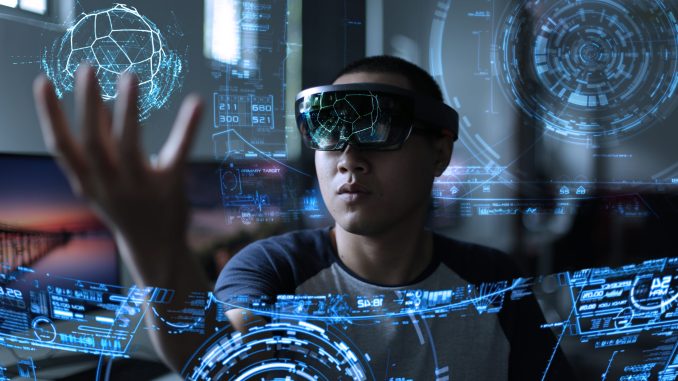
Augmented Reality (AR) is no longer just a futuristic concept; it’s becoming an integral part of various industries. By 2025, AR is expected to transform how we work, learn, and interact with the world around us. From healthcare to retail, the applications of AR are vast and impactful.
1. AR in Healthcare: Revolutionizing Patient Care
One of the most promising applications of AR is in the healthcare sector. Surgeons are now using AR to visualize complex procedures in real time, improving precision and reducing risks. For example, AR headsets can overlay 3D images of a patient’s anatomy onto their body, allowing surgeons to navigate delicate operations with greater accuracy.
AR is also being used for medical training. Medical students can practice surgeries and diagnose conditions in a virtual environment, gaining hands-on experience without the need for live patients. This not only enhances learning but also reduces costs and risks associated with traditional training methods.
2. AR in Retail: Enhancing the Shopping Experience
The retail industry is leveraging AR to create immersive shopping experiences. In 2025, customers will be able to virtually try on clothes, accessories, and even makeup using AR apps. Brands like Sephora and IKEA are already using AR to allow customers to visualize how products will look in their homes or on their bodies before making a purchase.
AR is also transforming in-store experiences. Smart mirrors in fitting rooms can suggest outfit combinations, while AR-powered displays can provide detailed product information. These innovations not only enhance customer satisfaction but also drive sales by reducing return rates.
3. AR in Education: Making Learning Interactive
Education is another sector where AR is making a significant impact. By 2025, classrooms will be equipped with AR tools that make learning more interactive and engaging. For instance, students can explore **3D models of historical landmarks, human anatomy, or even distant planets** through AR apps.
AR is particularly beneficial for STEM (Science, Technology, Engineering, and Mathematics) education. Complex concepts can be visualized in 3D, making them easier to understand. Additionally, AR can provide personalized learning experiences, adapting to each student’s pace and learning style.
4. AR in Manufacturing: Streamlining Operations
In the manufacturing sector, AR is being used to improve efficiency and reduce errors. Workers can use AR glasses to receive real-time instructions and visualize assembly processes. This reduces the need for extensive training and minimizes the risk of mistakes.
AR is also being used for predictive maintenance. By overlaying data onto machinery, technicians can identify potential issues before they become major problems. This not only saves time and money but also extends the lifespan of equipment.
5. AR in Entertainment: Creating Immersive Experiences
The entertainment industry is embracing AR to create immersive experiences for audiences. In 2025, AR will play a key role in gaming, live events, and even movies. Games like Pokémon GO have already demonstrated the potential of AR, and future games will take this to the next level with more realistic and interactive environments.
AR is also transforming live events. Concertgoers can use AR apps to access additional content, such as lyrics, artist information, and interactive visuals. This enhances the overall experience and creates a deeper connection between performers and audiences.
6. Challenges and Future Outlook
Despite its potential, AR faces several challenges. High costs, limited hardware capabilities, and privacy concerns are some of the barriers to widespread adoption. However, as technology advances, these issues are expected to be addressed, making AR more accessible and user-friendly.
In conclusion, AR is set to revolutionize multiple industries by 2025. Its ability to blend the digital and physical worlds opens up endless possibilities for innovation and growth. Businesses that embrace AR early will have a competitive edge, while consumers will benefit from enhanced experiences and improved services.